

 Login
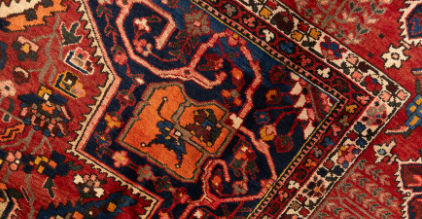
A look at the difference between Persian, Chinese and Turkish rugs and what makes each unique.
A rug can establish the character of a room before a single piece of furniture is placed. Look closer, and its details reveal a history of artistry and individual expression. Persian, Chinese, and Turkish rugs each encompass a wide range of styles. Read on to learn more about the distinguishing characteristics and history.
Persian Rugs: Intricate Patterns with Regional Distinction
Persian rugs originate in Iran, historically known as Persia. Their designs range from elaborate floral compositions to bold, angular patterns, reflecting the many cities, villages and weaving communities that produced them.
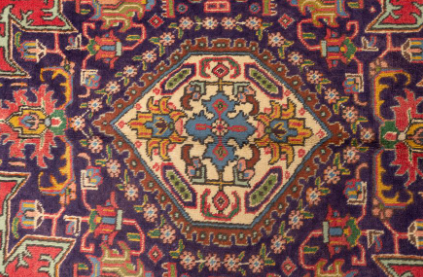
Some of the most recognizable examples come from the Tabriz style, which often features a central medallion surrounded by scrolling vines, blossoms, and richly ornamented borders. These compositions are the oldest and most well known style. Beginning in the 1500s during the Safavid Dynasty, Tabriz carpets were produced in formal urban workshops rather than tribal or village settings, and are celebrated for their workshop precision and tight weaves.
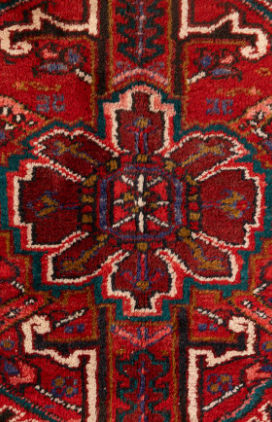
However, Persian rugs are far from uniform. A Heriz rug, for example, may feature a strong geometric medallion and angular drawing rather than delicate curves. The contrast illustrates why “Persian” describes a broad weaving heritage rather than a single look.
Chinese Rugs: Symbolism Woven into Design
Chinese rugs often draw on the same decorative language found in ceramics, textiles, and other works of art. Dragons, flowers, cloud forms, and geometric borders can carry meanings beyond their visual appeal.
In imperial contexts, dragon imagery could express power and authority. Other carpets combine floral fields with geometric frameworks, creating compositions that reward careful study. A historic Ningxia carpet, for instance, might bring together peony blossoms, trailing vines, and dragon motifs within a single design.
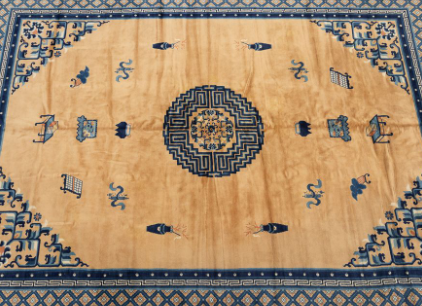
Chinese weaving also embraced changing tastes. Many early 20th-century Art Deco rugs introduced striking combinations of jewel tones, including turquoise, purple, yellow, and emerald. These examples offer a different expression from the blue-and-white palettes associated with many earlier Chinese carpets.
Turkish Rugs: Geometry, Flowers and Architectural Rhythm
Turkish rugs are rooted in the diverse weaving traditions of Anatolia. Many feature geometric patterns, stylized botanical forms, and strong repeating arrangements.
Ushak (also spelled Oushak) rugs originate from the city Uşak in western Turkey. The rugs from this historic weaving center are known to include star-shaped medallions, floral tracery, and expansive compositions. Some medallion Ushak carpets feature red or blue fields framed by borders of palmettes and scrolling leaves.
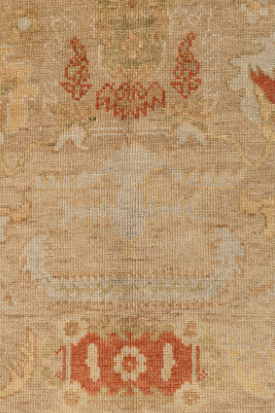
The most well known antique Turkish rug design features what is known as the “Lotto” pattern, and displays an all-over, repeating geometric lattice or grid of stylized yellow with a border of floral vines, or cloudbands on dark blue or contrasting grounds. These carpets acquired their name from the Venetian painter Lorenzo Lotto (1480–1556), whose oil compositions frequently depicted this distinct style of Turkish floor covering as a symbol of status and refined taste. Rather than laying them across floors as originally intended, European owners often draped Lotto carpets over tables to preserve their intricate craftsmanship.
What to Consider When Buying a Rug at Auction
Begin with what draws you in, then look beyond the overall impression.
- Read the catalog description: Note the attributed origin, approximate date, materials, and dimensions.
- Review condition carefully: Determine what level of wear or loss you would prefer. Contact the auction house to determine additional details on condition.
- Consider the setting: Measure your space and think about how the pattern will sit beneath furniture.
Find a Story to Bring Home
Understanding a rug’s origins adds another layer to the joy of acquiring it. Living with a piece of history offers the opportunity to experience the artistry within your own home. Explore Ahlers & Ogletree’s upcoming auction catalog to discover your next collecting opportunity. For rugs that catch your eye, review the individual lot details and contact our team with questions before bidding.